
View Other Patients

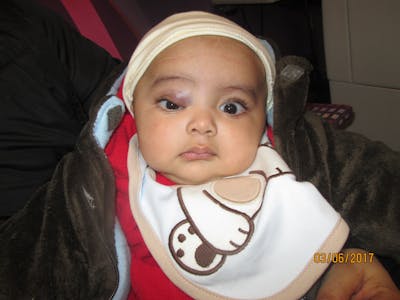

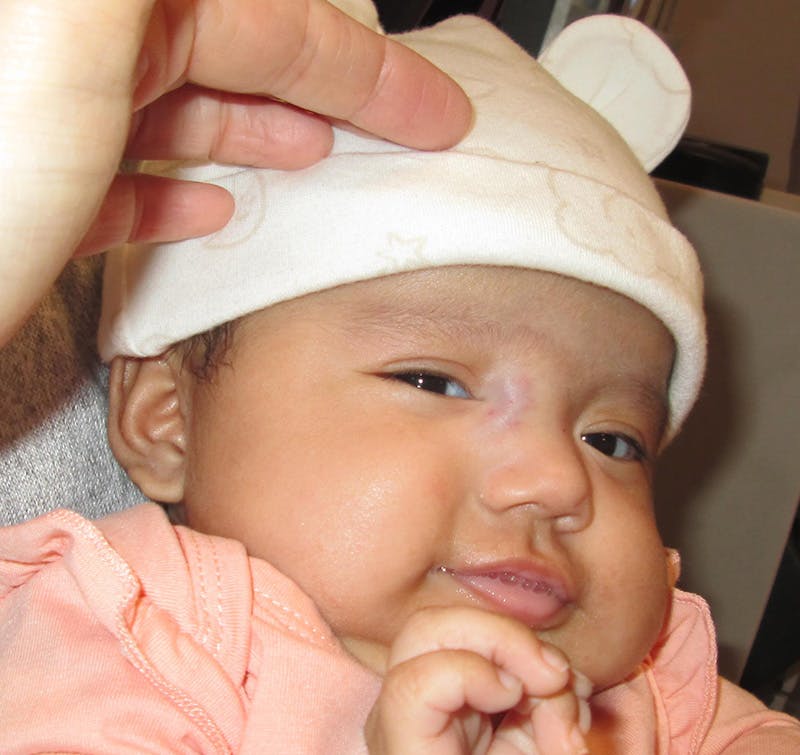
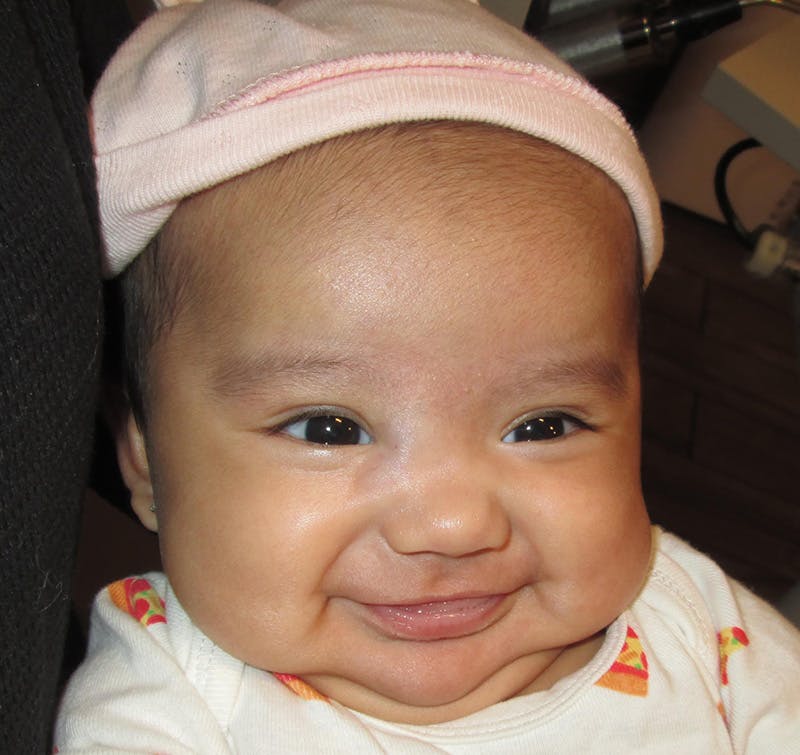
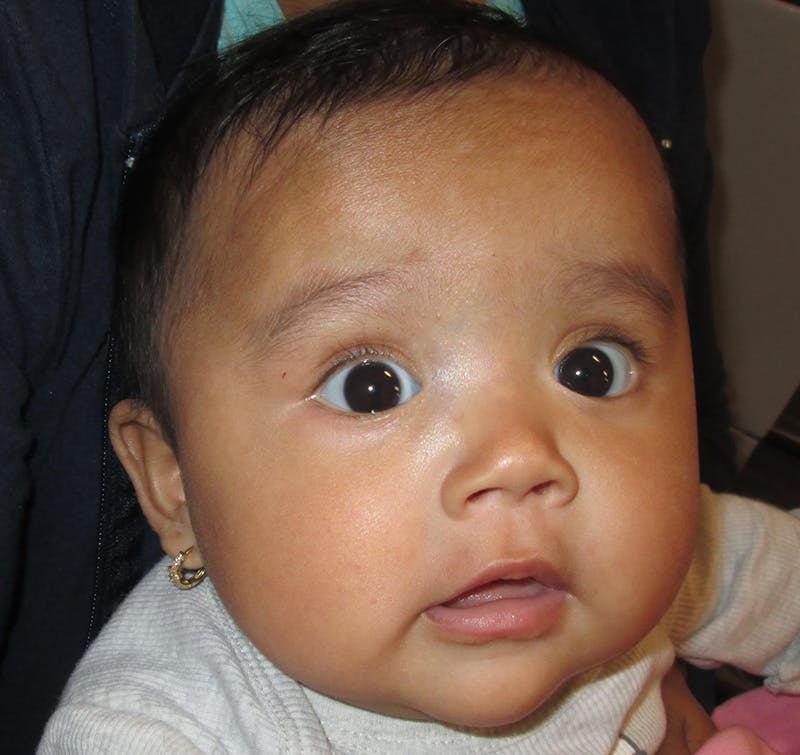


This patient first came to see me at two months of age with a soft, purple mass between her nose and right eye. It had been present since birth, was gradually enlarging, and became darker and more prominent when she cried.
Based on its appearance and behavior, this was clinically a capillary hemangioma—a common, benign vascular tumor of infancy.
Working closely with her pediatrician, we started Katie on oral propranolol, a medication that is now well‑established for treating hemangiomas. The dose was increased carefully over time. She tolerated treatment beautifully, with normal appetite and activity throughout.
Within three months, the improvement was dramatic.
Capillary hemangiomas often grow—sometimes rapidly—during the first year of life and then slowly regress on their own. When they occur near the eye, however, they can interfere with visual development and increase the risk of amblyopia, which is why careful monitoring and timely treatment are so important.
A capillary hemangioma is a benign cluster of extra blood vessels that often appears in the first weeks or months of life. Around the eye, these lesions can look purple, red, or blue and may become more noticeable when a baby cries or strains.
Hemangiomas commonly grow for several months, sometimes quickly, during infancy. Most then slowly shrink on their own over the next few years. In many parts of the body, this natural course means treatment isn’t needed. Around the eye, however, we pay closer attention.
When a hemangioma is near the eyelid or eye socket, it can:
Block or distort vision
Cause uneven focusing or astigmatism
Interfere with normal visual development
If left untreated, these effects can increase the risk of amblyopia (“lazy eye”), even though the hemangioma itself is not dangerous.
Treatment is considered when a hemangioma:
Is affecting vision or eye development
Is growing in a way that risks visual obstruction
Shows signs that it may cause long‑term visual imbalance
Today, the most common and effective treatment is oral propranolol, a medication that has been extensively studied and safely used for this purpose. When started early and monitored appropriately, propranolol often leads to rapid softening and shrinking of the lesion, while allowing normal visual development to continue.
Hemangiomas near the eye are common and treatable
Propranolol has a strong safety record when carefully prescribed and monitored
Most children tolerate treatment very well and do not feel “medicated”
The long‑term outlook for both appearance and vision is excellent
The goal is not cosmetic perfection—it is protecting vision during a critical period of development, while allowing the hemangioma to follow its natural course safely.
Careful monitoring, timing, and experience matter. With the right approach, most children go on to develop normal vision and require no long‑term treatment.