
View Other Patients

Laurie
Before & After: Capillary Hemangioma Treated with Oral Propranolol
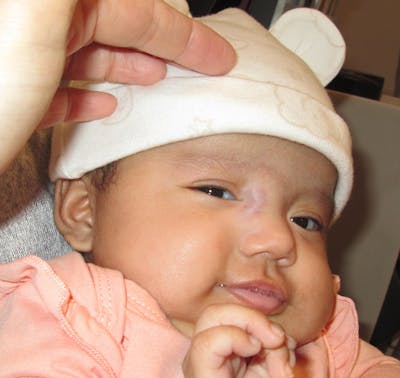
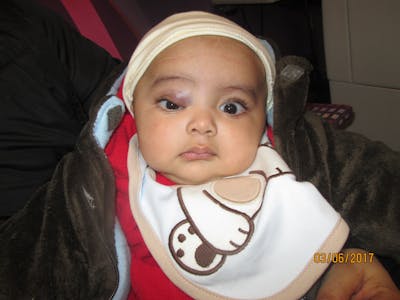
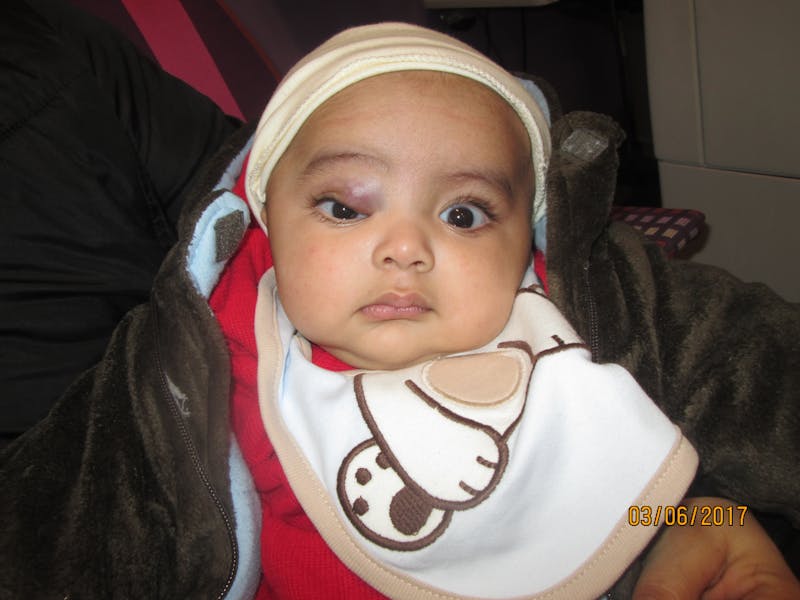
Laurie was referred to Dr. Lichtenstein as an infant because of a large capillary hemangioma involving the eyelid and orbit of her right eye. During the first months of life, the lesion enlarged significantly and began placing pressure on the eye, causing astigmatism that threatened normal visual development.
Although capillary hemangiomas are benign, those that occur around the eye can create vision problems during infancy. In Laurie's case, the greatest concern was not appearance, but the risk of amblyopia ("lazy eye") from the excessive astigmatism induced by the growing tumor.
Working closely with her pediatrician, we started treatment with oral propranolol. The dosage was carefully adjusted as she grew, and she was monitored carefully throughout treatment. The hemangioma responded beautifully, shrinking progressively over time and relieving the pressure that was causing astigmatism.
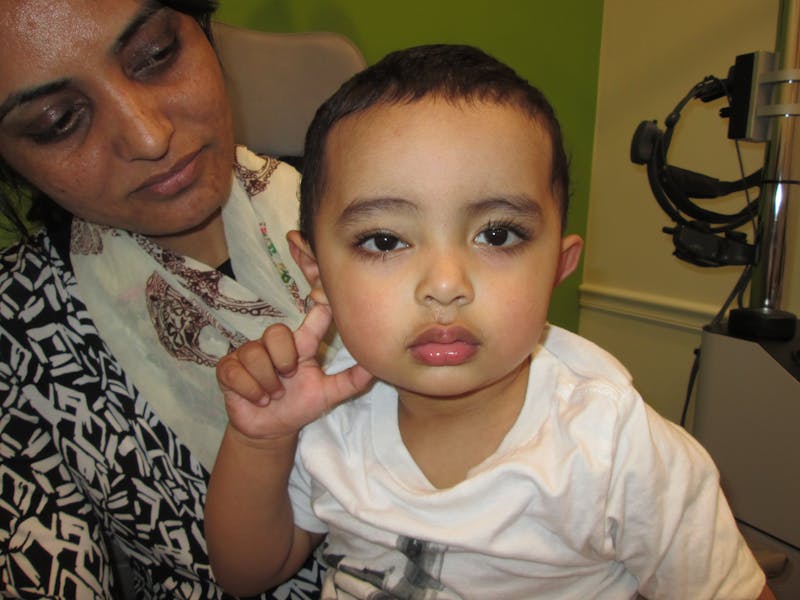
After completing treatment, Laurie was successfully tapered off propranolol. Her hemangioma regressed dramatically, the astigmatism improved, and normal visual development was preserved.
Today, the hemangioma has resolved, her facial appearance is normal, and her vision is normal.
Why Hemangiomas Around the Eye Matter
Capillary hemangiomas are among the most common tumors of infancy. They often appear during the first weeks of life and can grow rapidly during the first several months.
Most hemangiomas eventually shrink on their own, but those around the eye sometimes require treatment because they can:
Induce significant astigmatism in one eye, leading to amblyopia
Block the visual axis, leading to amblyopia
Stretch or distort the eyelid and skin, potentially causing lasting cosmetic concerns even after the hemangioma shrinks
For these reasons, what appears to be a cosmetic problem may actually be vision-threatening.
The Role of Propranolol
Since its introduction for infantile hemangiomas, oral propranolol has transformed treatment. In many children, the medication produces rapid softening and shrinkage of the lesion, allowing them to avoid surgery.
When prescribed appropriately and monitored carefully, propranolol has an excellent safety profile and is often highly effective at protecting vision while improving appearance.
The Goal of Treatment
The goal is not simply to make the hemangioma smaller.
The goal is to protect visual development during infancy, when the brain is learning to see. Early recognition and treatment can prevent permanent vision loss while allowing the lesion to regress safely over time.
For many children, as in Laurie's case, the result is normal visual development and little evidence that the hemangioma was ever there.