
View Other Patients



No Visible Scar
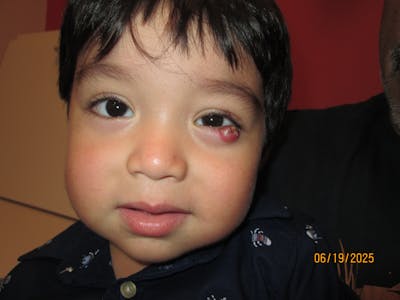
William's chalazion was ideally positioned for treatment through the inner surface of the eyelid (the tarsal conjunctiva). Approaching the chalazion from underneath the eyelid allowed the entire procedure to be performed without intentionally making an incision in the skin.
When possible, this is the preferred approach. The chalazion can be opened, drained, and the inflammatory capsule carefully removed from the inside while leaving the external skin completely untouched. In William's case, the overlying skin had become so thinned by the chalazion that a small skin opening developed during surgery. A few dissolvable sutures were all that was needed to allow it to heal beautifully.
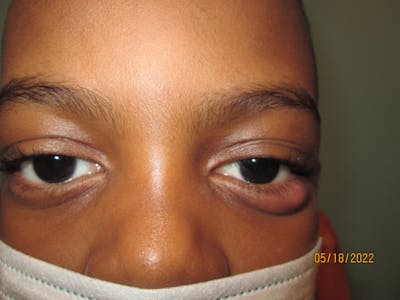
The photograph on the right demonstrates the result several weeks after surgery. The large chalazion has resolved, the eyelid contour has returned to normal, and there is no visible external scar.
Why the Inside Approach Is Often Preferred
Whenever possible, Dr. Lichtenstein treats chalazia from the undersurface of the eyelid. This technique avoids a skin incision, minimizes visible evidence of surgery, and typically allows for a rapid recovery.
Not every chalazion is a candidate for this approach. Lesions that have broken through the skin, caused significant skin inflammation, or developed external drainage may require surgery involving the skin surface instead. However, when the chalazion remains confined within the eyelid, an internal approach usually provides the simplest path to an excellent result.
The Goal of Treatment
The goal is straightforward: get rid of the lesion while preserving the natural appearance of the eyelid.
William's case demonstrates one of the best-case scenarios in chalazion surgery: a large lesion successfully treated through the inside of the eyelid, with restoration of a normal eyelid contour and no visible sign that surgery was ever performed.