
View Other Patients

When a Chalazion Breaks Through the Skin
Most chalazion procedures are performed from the undersurface of the eyelid, leaving no external incision. Phil's case was different.
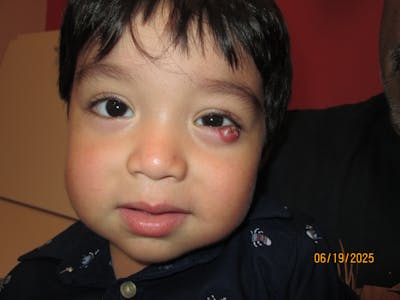
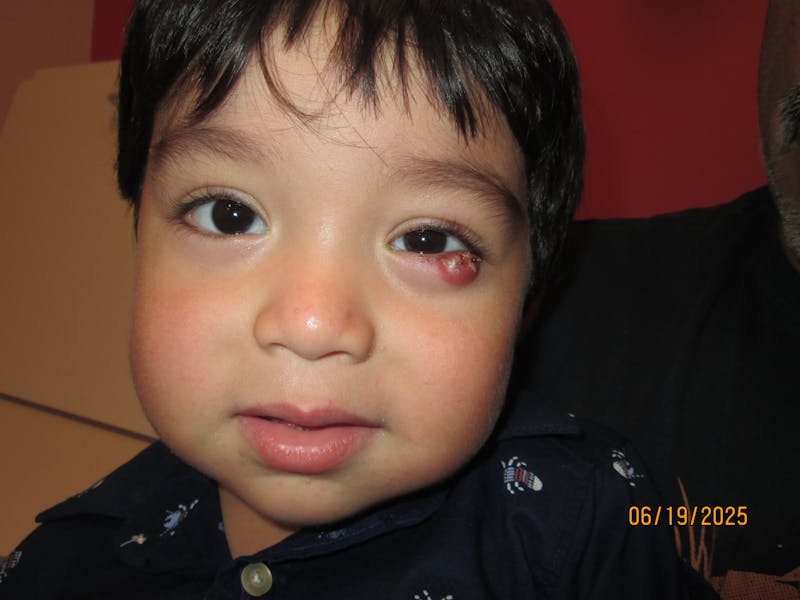
By the time he came to the office, Phil’s chalazion had already broken through and was draining onto the skin surface of the lower eyelid. Once this occurs, the inflamed skin itself becomes part of the problem, and simply draining the chalazion may not produce the best cosmetic result.
During surgery, the chronically inflamed tissue on the skin surface was carefully excised (removed). Depending on the amount of skin involvement and the degree of inflammation present, some children heal best with a few dissolvable sutures, while others are allowed to heal without sutures. The best approach depends on the location of the chalazion, the condition of the surrounding skin, and the goals of treatment.
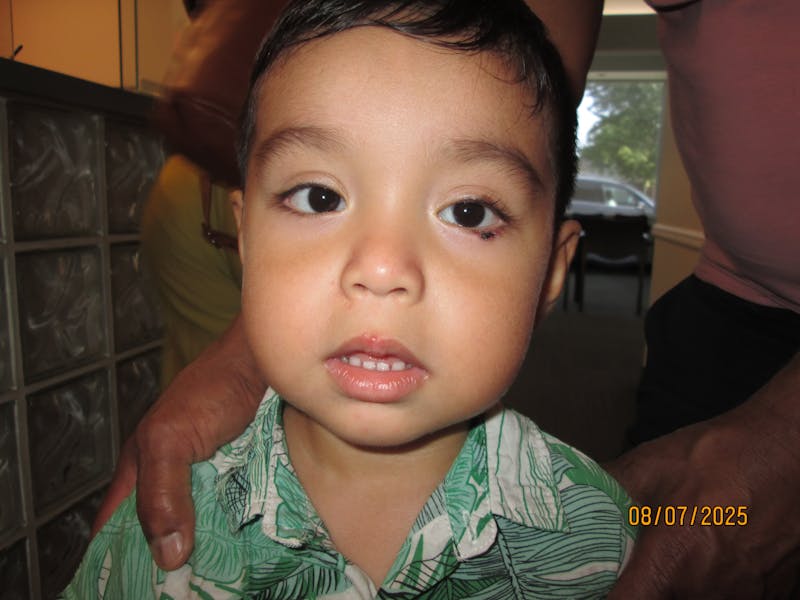
The photograph on the right was taken just days after surgery. No sutures were required in Phil's case. Although early healing is still visible, the chalazion has resolved and the eyelid contour has already improved significantly. As the inflammation settles and healing progresses over the following weeks, the surgical site typically becomes far less noticeable.
The Lesson
Once a chalazion starts draining externally, treatment is no longer simply about emptying a blocked oil gland. The goal becomes removing the chronic inflammatory tissue, addressing any existing scar formation, and eliminating the underlying lesion.
For parents, this can require a bit of patience. The eyelid may not look perfect during the first days or weeks after surgery, but allowing the tissues to heal properly often produces the best long-term result.