View Other Patients
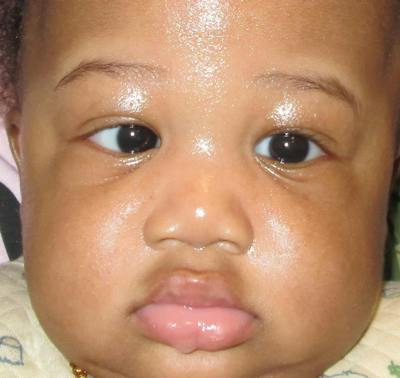
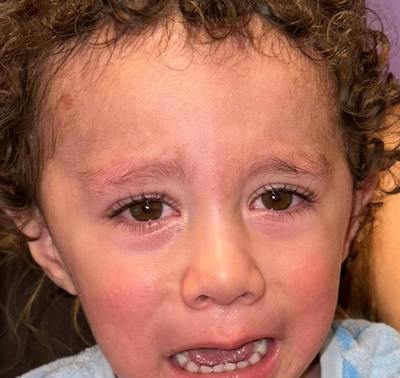
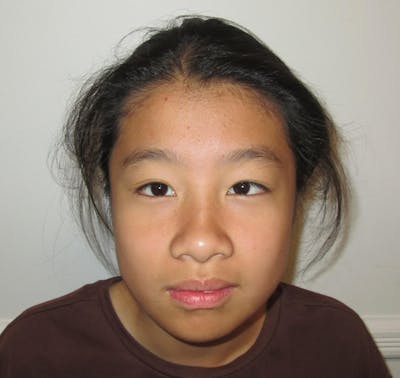
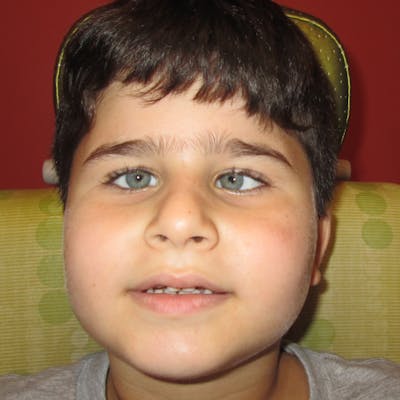
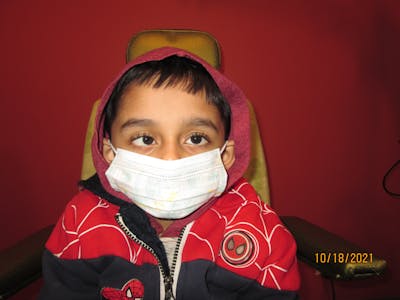
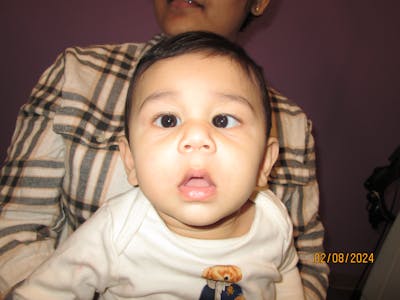
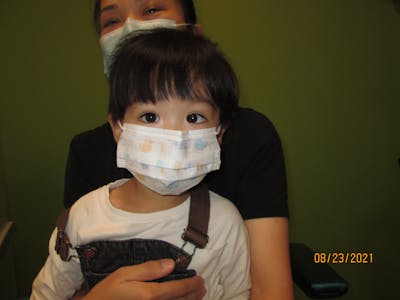
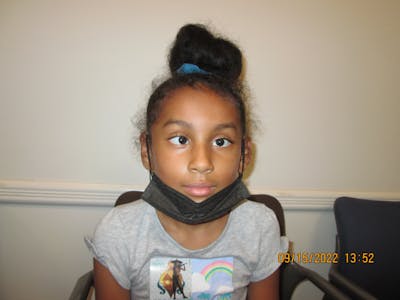
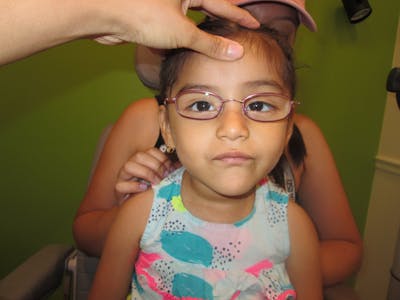

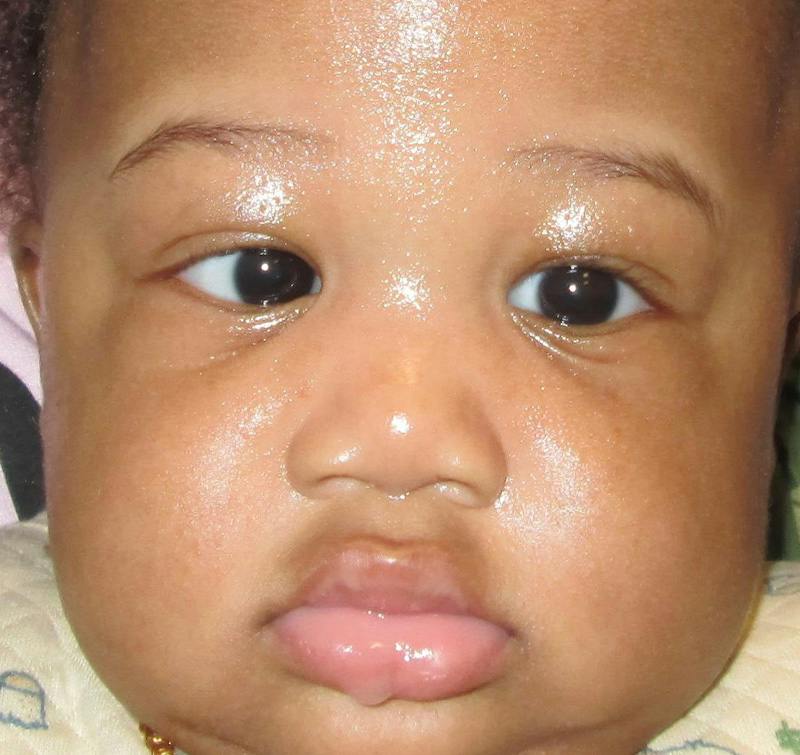
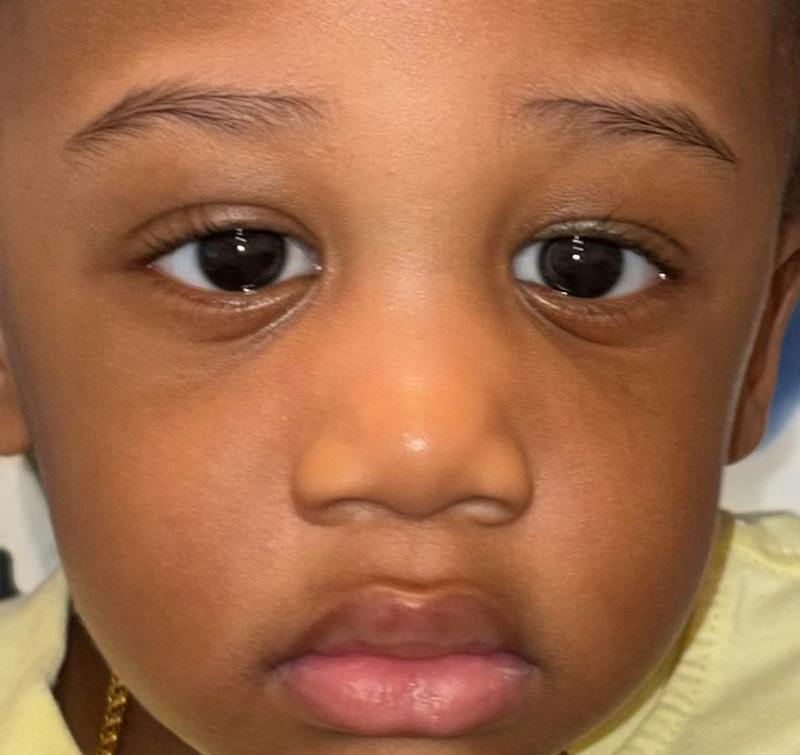
Roger has infantile (congenital) esotropia, a condition in which the eyes are not properly aligned and one or both eyes turn inward. He underwent strabismus surgery at 12 months of age to improve his eye alignment.
In the pre-operative photograph, Roger is looking directly at the camera with his left eye. Because that eye is fixating on the camera, the flash reflection is centered within the pupil. His right eye, however, is turned inward, causing the flash reflection to appear off-center. This difference in the position of the light reflex is one of the ways eye doctors assess ocular alignment.
The goal of surgery is to improve eye alignment, promote binocular visual development, and create a more natural appearance.
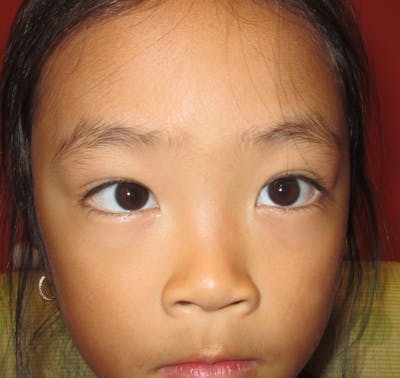
Roger's eyes are much better aligned following surgery. In the post-operative photographs, the flash reflection is centered in both pupils, indicating that both eyes are directed toward the camera together. This remains true even when he looks to the side.
So why do his eyes still appear crossed in some photographs?
The answer lies in the shape of Roger's face rather than the position of his eyes. Young children often have a broad, flat nasal bridge and prominent skin folds near the inner corners of the eyes. These features can partially cover the white part of the eye and create the illusion that the eyes are turning inward, even when they are properly aligned.
This appearance is called pseudostrabismus ("false strabismus"). Before surgery, Roger had a true eye misalignment, or strabismus. After surgery, the eyes are aligned, but his facial features create the impression that an eye turn remains.
As Roger grows, the bridge of his nose will become more prominent and the facial contours around the eyes will mature. As this occurs, the appearance of pseudostrabismus typically becomes less noticeable, allowing the true alignment of the eyes to be more easily appreciated.
Every child heals differently, and individual results will vary. The photographs shown represent one child's outcome and are provided for educational purposes. They should not be viewed as a guarantee of a specific result for any other patient.
During consultation, I discuss the expected benefits of surgery, the recovery process, and the possibility that additional treatment or surgery may sometimes be needed as a child grows and develops.