
View Other Patients
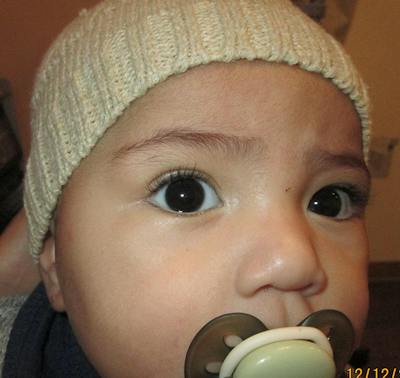
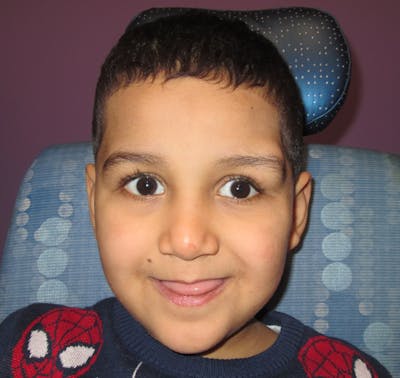
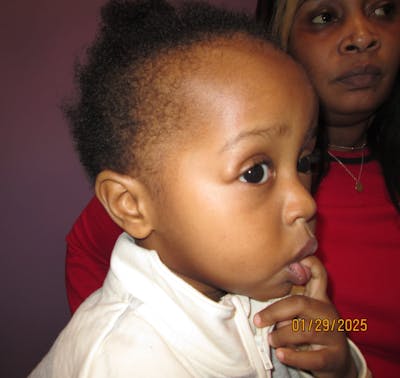
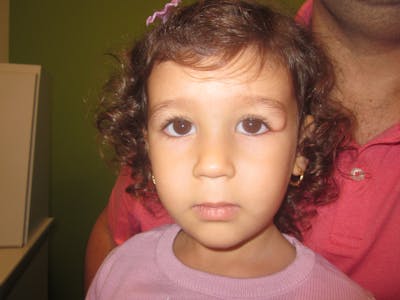
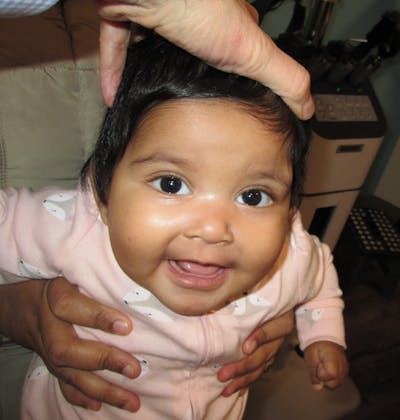
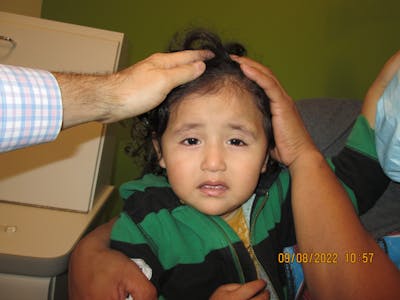



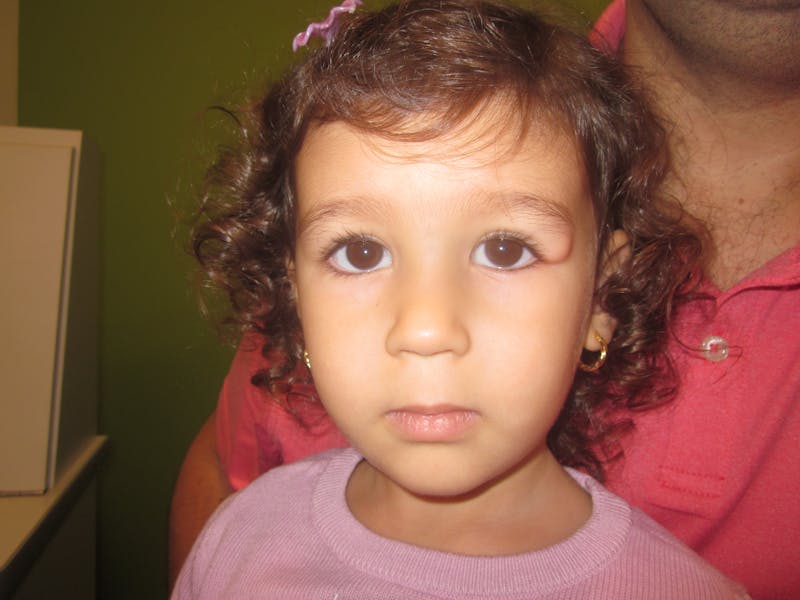
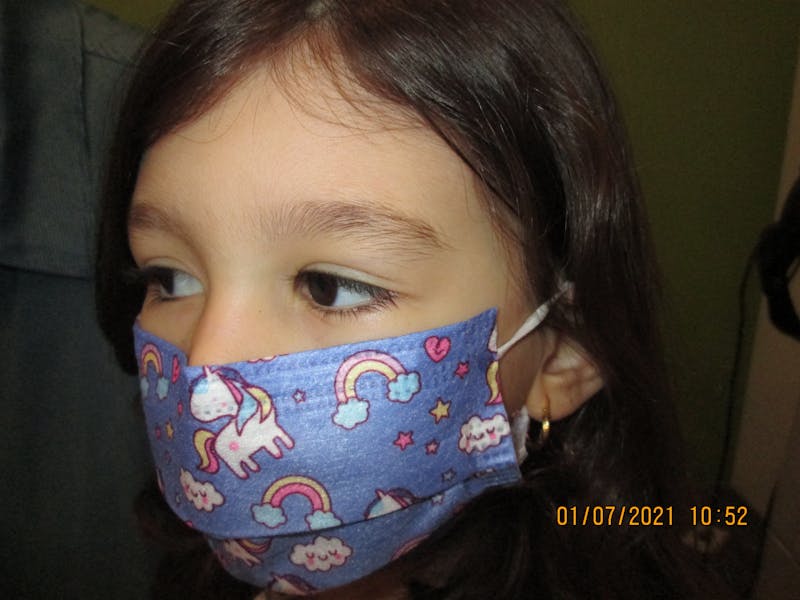
Helen was born with a small, painless lump at the outer part of her left brow. Over time, the bump became more noticeable, especially in photographs, and her family became concerned that it was slowly enlarging.
On examination, the mass was consistent with an anterior orbital dermoid cyst, a common congenital growth that develops near the bones of the eye socket. Although benign, dermoid cysts typically do not disappear on their own and often continue to enlarge gradually as a child grows.
Because the cyst was becoming more prominent, Helen underwent a brief outpatient procedure to remove it. The dermoid was carefully excised through a hidden incision placed within the natural crease of the upper eyelid, allowing access to the cyst while minimizing any visible scar.
The surgery was completed without complication, and Helen returned home the same day.
The before-and-after photographs show Helen before surgery and several years afterward. The contour of the left brow has returned to normal and the incision is extremely difficult to detect.
Like many children who undergo dermoid removal at a young age, Helen has no memory of the procedure itself. Her family was left with the result they had hoped for: a natural appearance and little evidence that the cyst was ever there.
Dermoid cysts are among the most common orbital tumors seen in children. They are present from birth and most frequently appear as a smooth, firm lump near the outer portion of the eyebrow.
Although benign, dermoid cysts generally do not go away without treatment. Over time they may:
Gradually enlarge
Become more noticeable cosmetically
Cause inflammation if they rupture
Create changes in the contour of the brow or eye socket
For these reasons, surgical removal is often recommended when a dermoid cyst becomes visible, enlarges, or causes concern for the family.
The goal of surgery is straightforward: complete removal of the cyst while preserving a natural appearance.
When performed through a carefully planned eyelid-crease incision, the scar typically becomes very difficult to see as it heals. Most children recover quickly and return to normal activities within a few days.
For families, one of the most reassuring aspects of treatment is that years later, as in Helen's case, there is often very little visible evidence that the dermoid cyst was ever present.